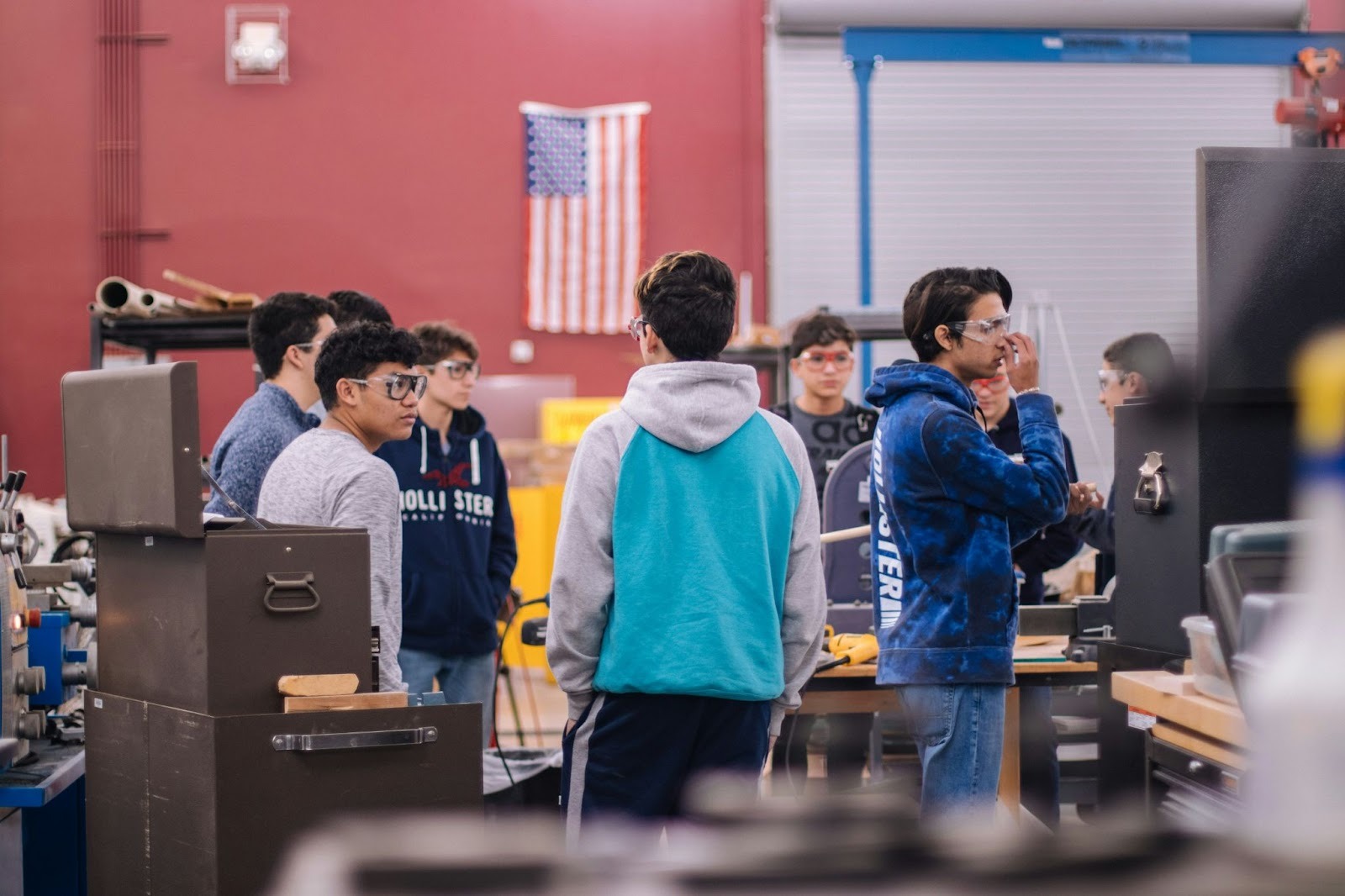
According to UNESCO, less than half of enrolled TVET students complete their programs in some regions, and in OECD economies, early drop-out rates can exceed 30%.
The problem isn’t the relevance of TVET, it’s how it’s delivered. Could technology help overcome this problem, and if so, how?
Hands-On Learners, Passive Lessons
Vocational students learn differently. They’re attracted to TVET because they want to work with their hands, solve practical problems, and see immediate results. Yet too often, what they find are text-heavy modules, long theoretical sessions, and static course materials that feel disconnected from the workshop or lab.
This disconnect affects motivation and learning outcomes alike. Engagement research in education consistently shows that active participation and multimodal content improve comprehension and retention, exactly what TVET was built on. But when digital transformation bypasses vocational training, students are left with outdated learning experiences that don’t reflect how they think or operate.
As a result, even highly motivated learners can disengage early, not because they lack ability, but because the learning format fails to match their learning style and TVET-related expectations.
The Language Barrier: A Hidden Factor in Drop-Out Rates
A less visible but equally important barrier to engagement in TVET is language. In many countries, TVET attracts a significant number of international students, who may not fully master the language of instruction.
This creates an immediate learning gap: theory-heavy written materials become a source of frustration instead of empowerment. Even if these students have the technical aptitude and motivation, language proficiency determines their pace and confidence, not their actual capability.
This isn’t a small issue, it is structural. In regions like Northern Europe and North America, up to 25% of TVET learners are foreign-born (OECD, 2022). And studies consistently show that learners with limited language skills are more likely to drop out early.
Yet, it’s also a barrier that’s relatively easy to address with the right tools:
Simplified, multilingual resources
Visual and audio-based instruction
Voice technology (like text-to-speech) that enables students to listen and learn in the language they understand best
When learners can process information in a way that fits their background and cognitive comfort zone, engagement naturally improves.
The challenge for TVET is not just about adopting new technologies, it’s about improving students’ engagement. For vocational students, engagement comes from doing, not from reading. It comes from connecting theory with tangible outcomes, and from learning environments that respect their abilities and learning styles.
Technology, including accessible voice tools such as text to speech, plays an important role here, not as a miracle cure, but as a bridge. A bridge between learners and content, between theory and practice, between inclusion and motivation, and ultimately between students and their dream job.
Conclusion: Engagement as the Foundation for Skills
If the world needs more skilled workers, TVET needs to be able not only to attract more students, but to keep them more engaged. And engagement doesn’t come from more content; it comes from better connection between how people learn and how knowledge is shared.
By embracing more interactive, multimodal, and accessible approaches, vocational education can finally align with the very principles that define it: learning by doing and understanding by experiencing.
If you would like to know how ReadSpeaker’s technology can help make your course content more engaging, request a demo.
Let us set up a free, no-strings-attached demo for you to see for yourself.
Discover how ReadSpeaker and CBTL support secure corporate learning with accessibility, data sovereignty, on-premise deployment and reliable text-to-speech technology.
Accessibility doesn’t end when a course is published. It continues throughout the learner journey. Discover how ReadSpeaker and Brickfield, as Certified Moodle Integrations, help institutions build accessibility into every stage of learning.